
Hardwood floor refinishing
Sanding back to bare wood and finishing again, and how the job runs.
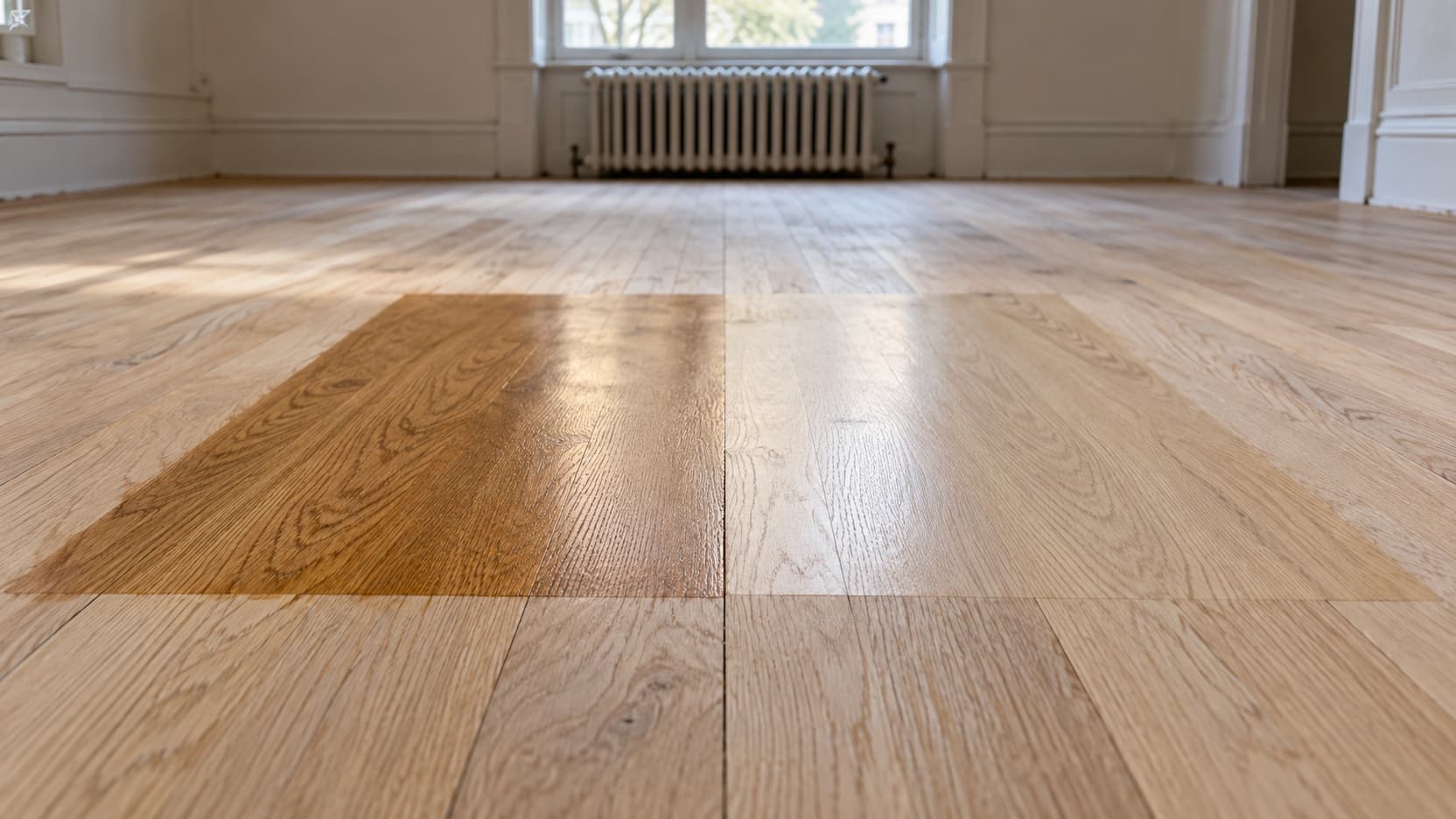
Once a floor is sanded back to bare wood, the finish decides how it looks, how soon you can walk on it and how it wears. Oil based and water based polyurethane are the two you will be offered, and here is how they differ.
Both are polyurethane. Both protect the wood with a clear film that takes the wear so the wood does not. The difference is what carries the polyurethane onto the floor and what that carrier leaves behind.
Oil based polyurethane is carried in solvent. It goes on thicker, it adds a warm amber tone to the wood, and that tone deepens as the years pass. It needs overnight between coats and it smells strongly while it dries.
Water based polyurethane is carried in water. It goes on thinner and clearer, it keeps the wood close to the colour it was when bare, it dries in hours rather than overnight, and the smell is mild. It usually needs an extra coat to build the same protection.
Six things to weigh, in the order people usually care about them.
Oil based warms the wood and keeps warming it. On red oak that reads as a classic golden floor. Water based stays clear, so a pale white oak, a maple floor or a grey or whitewashed stain keeps the colour you chose.
Water based coats can usually be recoated the same day, and the floor takes light foot traffic sooner. Oil based coats need overnight between them, and the floor wants longer before furniture and rugs come back. Either way full hardness takes days to weeks, not hours.
Oil based finishes give off strong solvent fumes while they dry, and in an apartment building the smell travels. Water based finishes are far milder. This is often what decides it for someone living in the home during the work.
Both wear well when applied properly on a well sanded floor. Oil based has a long record and is forgiving of a slightly imperfect coat. Modern water based finishes, especially the two component ones, are as hard or harder. The preparation underneath matters more than which of the two goes on top.
Both come in matte, satin and gloss. Water based finishes tend to look a little more transparent at the same sheen, and matte water based is what gives the natural, unfinished look many people ask for now.
A floor with a sound finish can be buffed and recoated without sanding, which is the cheapest way to keep it looking new. The recoat has to be compatible with what is already there, so it helps to know which finish you have. We tell you, and we write it down for you.
Neither is the cheap one. Oil based costs less per gallon and needs fewer coats. Water based costs more per gallon and gets you back on the floor sooner. On the whole job the difference is smaller than the colour and the drying time.
The finish is the same anywhere. The building around it is not.
Solvent fumes from an oil based finish move through a building. In a house it is an open window. In a shared building it is a conversation with the neighbours below and above, and a reason many co-op and condo jobs go water based.
If you are staying in the apartment or coming back the same evening, the faster drying finish matters. A water based job lets you walk on the floor in socks sooner. An oil based job usually means a night or two elsewhere.
Buildings set working windows. A finish that can take two coats inside one window gets the job done in fewer days than one that needs overnight between each coat.
Heated apartments are dry in winter. Drying times shorten in warm dry air and stretch in humid air, so we plan the coats around the season and the room rather than around the label on the can.
Not sure which finish suits your floor? Tell us the wood, the colour you want and whether you are living in during the work.
Call (929) 207-0351If you want a warm, traditional look on oak and you can leave the apartment for a few nights, oil based does that job well and has done for decades.
If you want the wood to stay the colour it is when sanded, you are living in during the work, or the building is strict about fumes and hours, water based is the answer, and a good two component water based finish wears every bit as well.
Either way we put sample patches on your own floor before committing. The same finish looks different on different timbers and on wood of different ages, so a can label is a starting point and your floor is the real test.
Yes, once the oil based finish has fully cured and the surface has been abraded so the new coat can grip. The reverse is possible with the same preparation.
What you cannot do is go over a finish that is still curing, or one that has wax or oil soap on it. That is why a recoat starts with a clean and a test patch.
Not the way oil based does. Oil based finishes amber as they age and that is part of their look. Water based finishes stay clear, which is why they are the choice for pale woods and for grey or white stains.
The pages behind this one.
Sanding back to bare wood and finishing again, and how the job runs.
What moves the number, including the finish and how many coats.
A new floor finished in place faces the same choice.
Tell us the wood, the colour you are after and whether you are living in during the work. We will tell you which finish we would use and why, and put samples down before anything is committed.