
What floor work costs
What moves the number, and whether to refinish or replace.
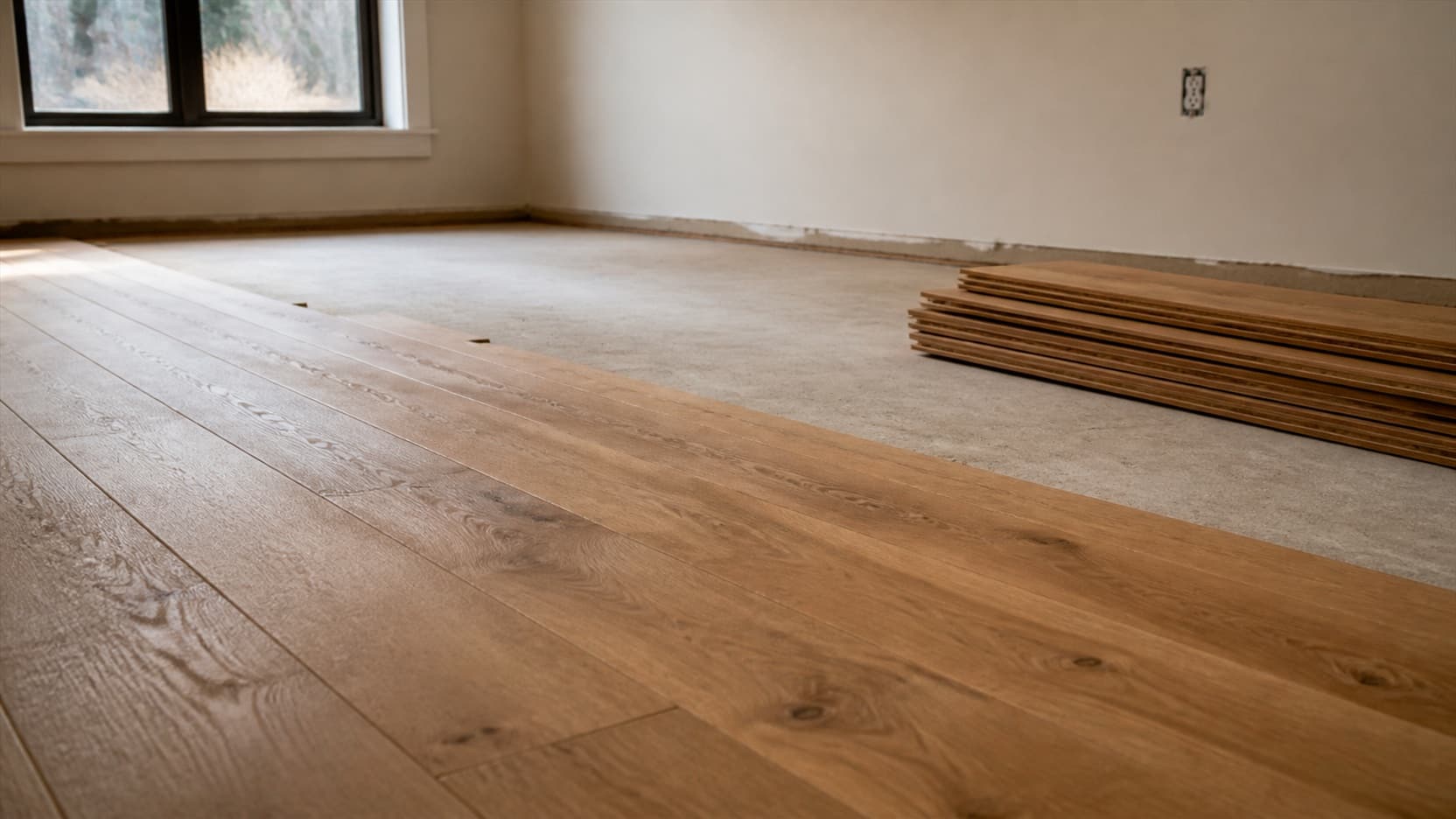
We lay new wood floors across all five boroughs, solid and engineered, over timber joists and over concrete. Which of those you have usually decides the rest.
A new wood floor is mostly decided before any board is opened. What is underneath, how flat it is, how much height you have, and what the building allows all narrow the options before taste comes into it.
That is why the first visit is about the subfloor rather than about samples. A floor laid over the wrong preparation will telegraph every problem underneath it within a year, and no board is good enough to survive that.
Once the base is understood, the choice between solid and engineered usually answers itself.
The first real decision, and in this city it is usually settled by what is under the floor rather than by preference.
One piece of timber all the way through. It can be sanded and refinished several times across its life, which makes it the long game. It wants to be fixed to timber, and it moves more with humidity, so it suits houses and buildings with timber joists.
A real wood wear layer over a stable core. It moves far less, which is what makes it the answer over concrete and in buildings with underfloor heating. How many times it can be refinished depends on how thick that wear layer is, so the layer thickness is the number worth asking about.
Concrete slab, most new build and many apartments: engineered. Timber joists, most houses and much older stock: either, and solid becomes worth the money. Below grade or anywhere damp: engineered, or a non-wood option.
Boards come either pre-finished from the factory or raw to be sanded and finished in place. Finishing in place gives a flatter, seamless surface and adds days to the job. Pre-finished is faster and the joints stay visible.
Engineered hardwood is a real wood floor. The top layer, called the wear layer, is a slice of solid hardwood, and underneath it are several layers of plywood or a dense wood core glued in alternating directions.
That construction is why it moves so little with humidity, and why it can go over concrete, over underfloor heating and in below grade rooms where a solid board would cup or gap.
How many times it can be sanded depends entirely on how thick the wear layer is. A thin veneer may take one careful sanding or none. A thick one refinishes like a solid floor. It is the one number worth asking for before choosing a board.
Not sure what is under your floor? Tell us the building and we will tell you the options.
Call (929) 207-0351Four things that happen before the first board goes down.
Wood floors need a flat base. Dips and humps under a floor become movement, hollow sounds and stress on the joints. Levelling compound or sheeting goes down first where the base needs it, and skipping this is the most common reason a new floor disappoints.
Concrete holds moisture longer than people expect, especially in newer buildings. We check it before laying, because wood over a damp slab will cup no matter how well it was fitted.
Boards sit in the room they are going into before they are laid, so they reach the humidity they will live at. Laying straight off the truck is how gaps appear in winter.
A new floor changes the floor level. Doors, thresholds and appliance clearances all get checked first, because finding out afterwards is expensive.
Over timber joists, boards are usually nailed or secret-nailed through the tongue. It is the traditional method and it holds a solid floor properly.
Over concrete, boards are glued down or floated over an underlay depending on the product and the room. Glued gives the most solid feel underfoot and floating is quicker and more forgiving of small movement.
Which one you get is a judgement about the base, the board and the room rather than a house style. We tell you which we are proposing and why.
Oak is the usual New York floor, and the two oaks are not the same floor.
A pinkish, salmon undertone and a bolder, more open grain. It takes stain readily, and it is the oak you will usually find under the finish in a prewar apartment or an older house here, which matters when a new floor has to match an old one.
A yellow to greyish brown undertone, a tighter grain and a harder, denser board. It is what pale, natural, grey and whitewashed floors are made from, because the colour stays true, and its closed grain shrugs off a spill a little better.
Matching an existing floor points to red oak. A pale, modern or grey floor points to white oak. Both refinish well, both last for decades, and both come in solid and engineered.
Maple, walnut and hickory are all laid too. Maple is pale and very hard and takes stain unevenly, walnut is dark and softer, and hickory is the hardest of the common floors with the busiest grain. Oak is the default because it does everything well.
The comparison people make before they call, answered straight.
Costs more to buy, can be sanded and refinished several times across its life, and feels and sounds like wood underfoot. It moves with humidity, so it wants the right base. It suits a home you are staying in and rooms where the floor is part of the look.
A printed wood image over a fibreboard core with a hard clear wear layer. It resists scratches and dents well and goes down fast, and it cannot be sanded, so when the wear layer goes the floor is replaced. It suits rentals, bedrooms and hard use on a tighter budget.
Standing water. Laminate swells and wood cups. Kitchens, bathrooms and basements are usually a vinyl plank job.
If the question is really about money, laminate wins on the day and wood tends to win over the years you live on it.
No two floors cost the same, and these are the reasons why, roughly in order.
The first number. More area is more boards, more fixing and more days. A quote for the actual area beats a quote per room.
Species, grade, width and thickness all move the price of the material, and solid boards generally cost more than engineered of the same species. Wide planks cost more per square foot than strip flooring and go down faster.
Prefinished boards arrive coated and the room is usable when the last one goes down. Site finished boards are sanded and coated after laying, which adds days and coats and gives a flatter, seamless surface.
Levelling, a moisture barrier over concrete, or new sheeting over tired joists. None of it shows in the finished floor and all of it decides how long the floor lasts.
Carpet is quick. A glued or nailed floor is slower, and everything that comes up has to go down the stairs or into a service elevator and away.
Nailing over joists, gluing over concrete or floating over underlay are different amounts of work. Stairs, thresholds, closets and doorways add cuts and fitting time out of proportion to their area.
Access and hours count too. A walk-up load in and a building with a short working window do not change the floor. They change how many days it takes. We look before quoting, and the costs page has the refinish or replace half of the question.
The pages people read next.
What moves the number, and whether to refinish or replace.
If laminate is the right call for your rooms and your budget.
If the floor you have may not need replacing after all.
Tell us the rooms, the rough area, the building and what is under the floor now. We will tell you what your options actually are.