
What floor work costs
What moves the number, and whether to refinish or replace.
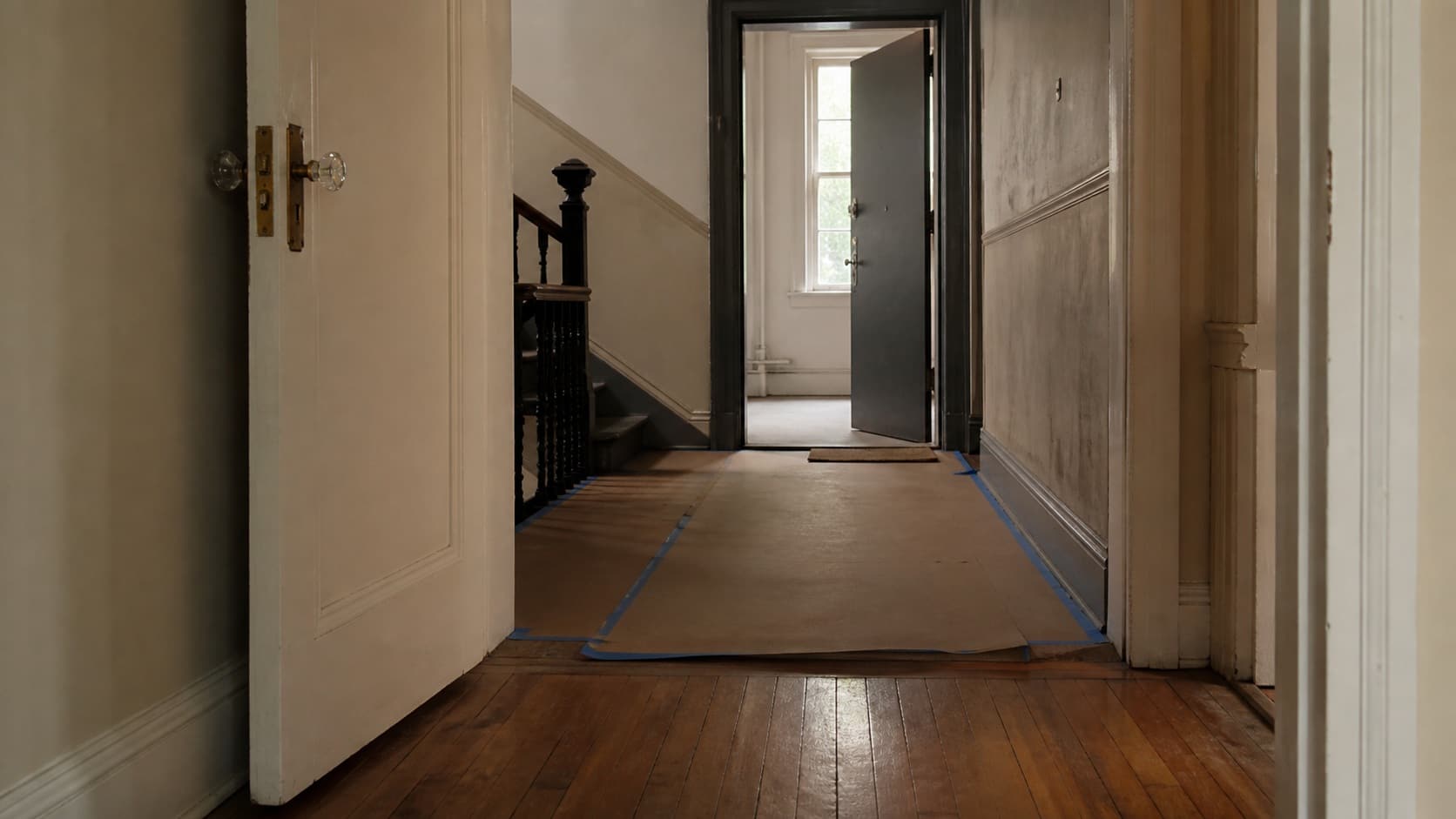
In most of this city the floor is only half the job. The other half is the building it sits in, and that part is usually settled before a single machine arrives.
In a detached house, floor work is between you and the floor. In an apartment building it involves the board, the managing agent, the super, your neighbours and often a lift that other people need.
None of that makes the work harder to do well. It does decide when it happens, how long it takes and what has to be agreed first. Getting it wrong is what turns a four day job into a three week one.
So we plan that part before we plan the sanding.
In the order they usually come up.
In most co-op and condo buildings the board wants to know what is being done and when before it starts. Approval is often the slowest step in the whole project, so it is the first conversation to have with your managing agent rather than the last.
The city sets an outer limit and your building usually sets a tighter one. Buildings commonly allow work on weekdays inside a window that is narrower than the legal one, and that window decides how many days the job takes.
A service elevator that has to be booked, a passenger lift with protection requirements, or six flights of stairs with no lift at all. Each of those is a different day, and each one is planned before we arrive rather than discovered on the morning.
Lobbies, corridors, lifts and stairwells are shared, and most buildings expect them covered while material moves through. That protection is part of the job and we bring it with us.
New York City permits construction on a property between 7am and 6pm on weekdays. Work outside that window, including weekend work, requires an after hours permit known as a variance, issued by the Department of Buildings or the Department of Transportation.
The city also requires a construction noise mitigation plan to be in place before construction or renovation begins, and that plan must already exist when a variance is applied for.
In practice your building's own rules are usually tighter than the city's, so the hours you actually get are the ones in your house rules. It is worth reading them before scheduling anything.
Not sure what your building will ask for? Tell us where you are and we will talk it through.
Call (929) 207-0334The same floor, three quite different jobs.
Board approval, a booked service elevator, defined work hours and protection through the shared parts. Boards also commonly set their own requirements about how much of a floor has to be covered by rugs once the work is done, so it is worth reading your house rules before choosing a finish.
No lift, so machines, material and waste all go up and down the stairs. Fewer approvals to wait for, and more of the day spent on access. Usually easier to schedule and slower to load in.
Access is straightforward, the hours are yours, and larger areas can be done in one run. The constraints are practical rather than administrative, mostly about where furniture goes and which rooms you need to keep using.
What is under the floor matters too. Boards over a concrete slab behave differently from boards over joists, and that affects both what can be installed and how a floor is repaired.
Sanding is the loud, dusty part, and it is also the part with modern equipment built to contain it. Our sanders run with dust extraction, which takes most of the dust at the source rather than letting it settle across the apartment. We seal off the rooms that are not being worked on.
The noise is unavoidable while sanding is happening, which is exactly why the hours matter in a shared building. Neighbours mind far less when the work happens inside the window everyone agreed to.
After the finish goes down, the wait is curing rather than work. How long before you can walk on it, and how long before furniture can come back, depends on the finish chosen. We tell you both numbers at the estimate so you can plan where to sleep and when to move things back.
Tell us your building and your floor, and we will tell you the sequence.
Call (929) 207-0334So it does not become your project to manage.
What your building requires, which hours it allows, and whether a lift has to be booked. Before scheduling, not after.
How machines and material arrive, which route through the building, and what gets protected on the way.
The hours your building allows are the hours we work, and the schedule is built around them rather than against them.
Protection comes out, corridors and lifts are cleaned, and the only place anything changed is your floor.
The other things people want settled before they book.
What moves the number, and whether to refinish or replace.
All five boroughs, and the site that covers each one.
Tell us the building and the floor, and we will tell you the sequence.
Where you are, which floor, and what your building has already told you. We will tell you what the job looks like from there.